
One of the very first questions people ask when considering tattoo removal is simple:
“How many sessions will it take?”
It sounds like a straightforward question. It isn’t.
The honest answer is: it depends — but not in a vague or evasive way. Tattoo removal follows biological rules, physical laws, and individual variables that interact differently for every person and every tattoo. Clinics may give averages, but averages only become meaningful once you understand why those numbers exist.
Tattoo removal is not a cosmetic eraser. It is a layered biological process rooted in how ink behaves inside skin and how your immune system handles foreign particles. Understanding this gives you control over expectations, planning, and emotional readiness for the journey.
If you want a broader understanding of tattoo behavior inside the skin and how pigment interacts with the body, start here:
https://keroppymaeda.com/tattoos/
This guide explains what determines session count, realistic averages, and how to estimate your own tattoo’s removal journey with clarity rather than guesswork.
Average Number of Tattoo Removal Sessions (What Most People Experience)
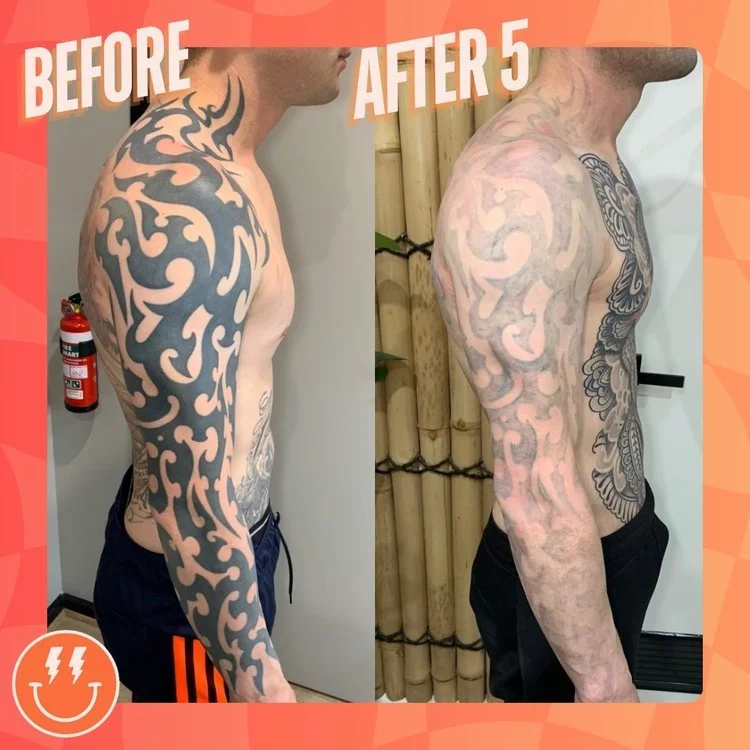
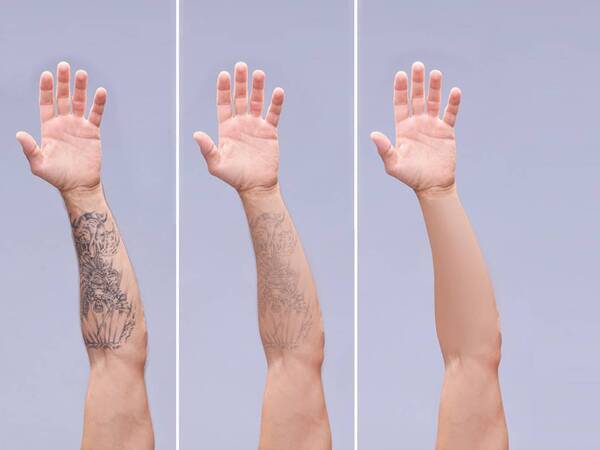
For most individuals, six to twelve sessions is the typical range for significant fading or near-complete removal.
Some tattoos fade substantially in four to five sessions.
Others require fifteen or more sessions.
Sessions are usually spaced six to ten weeks apart. That spacing alone means the full process commonly spans eight to twenty-four months.
This timeline is not arbitrary.
It exists because your immune system — not the laser — performs the actual removal.
Laser treatment breaks ink into fragments. Your body clears those fragments gradually. The speed of that clearance dictates everything.
Session count is not a promise. It is a probability range shaped by biology.
Tattoo Removal Is Fragmentation and Clearance, Not Erasing


4
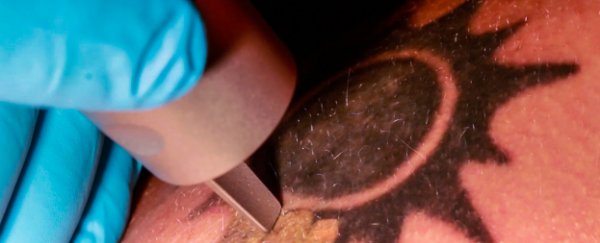
Tattoo removal does not scrape ink off the skin.
A laser delivers ultra-short pulses of energy that shatter pigment particles into smaller fragments. Some fragments become tiny enough for immune cells to capture. Others remain too large and must be targeted again in future sessions.
Each session creates three outcomes:
Some pigment fragments into removable particles.
Some pigment remains unchanged.
Some pigment becomes partially fragmented.
Only a portion of ink can be broken down safely during a single treatment. Attempting to destroy everything at once would severely damage surrounding tissue.
Think of tattoo removal like gradually sanding layers of paint rather than ripping drywall out of a wall.
Controlled reduction preserves skin integrity.
Why Multiple Sessions Are Inevitable
Your body does not rush.
Once pigment fragments are created, immune cells must recognize the fragments as waste, engulf them, transport them through lymphatic channels, and filter and eliminate them.
This transport happens slowly and continuously over weeks.
No laser can override this biological pacing.
Even if future technology could fragment pigment perfectly in one pass, your immune system would still need time to process the debris.
This is why session count and time are inseparable.
The Silent Partner: Your Immune System
Tattoo ink survives inside the skin because immune cells trap pigment inside themselves but cannot digest it. Those cells remain in place, effectively locking pigment into the dermis.
Laser treatment disrupts this equilibrium.
Once pigment is broken into smaller fragments, immune cells can finally treat it as disposable material.
Macrophages engulf fragments, migrate, die, and are replaced by new macrophages that continue the transport cycle.
This cellular relay race explains why removal happens gradually rather than dramatically.
Your immune system is not designed for speed.
It is designed for steady maintenance.
Major Factors That Determine Session Count
Pigment Color
Dark pigments absorb laser wavelengths efficiently.
Black, dark blue, and dark green typically respond best.
Red, orange, and brown are moderately responsive.
Yellow, white, pastel tones, and light green reflect more light and absorb less energy, making them far more difficult to break down.
Multi-color tattoos behave like multiple tattoos layered together.
Tattoo Size
Larger tattoos contain more pigment and require more total fragmentation.
A coin-sized tattoo may fade within five to seven sessions.
A full sleeve may require twelve to eighteen sessions or more.
Size alone does not dictate difficulty, but it increases total workload.
Ink Density
Professional tattoos usually contain densely packed pigment placed with consistency and depth.
Amateur tattoos often contain lighter pigment and shallower placement.
Dense professional work nearly always requires more sessions.
Density often matters more than surface area.
Ink Depth
Pigment placed deeper in the dermis is harder for laser energy to reach and harder for immune cells to clear afterward.
Depth varies based on artist technique, machine voltage, needle configuration, and skin thickness.
Two tattoos that look identical may behave very differently due to depth alone.
Tattoo Age
Older tattoos often fade more easily.
Over time, pigment migrates, disperses, and slowly degrades. The immune system may have already removed small amounts of ink.
Fresh tattoos have not benefited from this slow natural erosion.
Placement on the Body and Circulation

4
Blood flow and lymphatic circulation strongly influence clearance speed.
Areas closer to the heart with stronger circulation tend to fade faster: chest, upper back, upper arms.
Areas with weaker circulation fade slower: hands, feet, ankles, fingers.
Distance from the heart reduces the efficiency of waste transport.
This is why identical tattoos on different body parts may require very different session counts.
Your Immune System Sets the Ceiling
Your body does the real work.
People who often clear ink faster tend to have good circulation, remain physically active, stay hydrated, and avoid smoking.
Factors that commonly slow clearance include smoking, poor circulation, certain medical conditions, and advanced age.
Two people with identical tattoos receiving identical treatments can experience very different outcomes.
This variability is normal.
How Session Count Connects to Time
Session number and total timeline are mathematically linked.
If a tattoo requires ten sessions and sessions are spaced eight weeks apart, the process automatically spans around eighteen months.
For a deeper breakdown of how long it takes to remove a tattoo, see:
https://keroppymaeda.com/how-long-does-tattoo-removal-take/
Understanding this connection prevents unrealistic expectations.
The Kirby–Desai Scale and Professional Estimation
Many clinics use scoring systems that consider skin type, tattoo location, color count, ink density, presence of scarring, and layering or cover-ups.
Each variable adds points.
Higher scores suggest more sessions.
These tools provide guidance, not guarantees.
Biology always has the final vote.
Why Waiting Between Sessions Matters
Spacing sessions too closely does not speed removal.
The immune system needs time to transport fragments, process waste, and stabilize tissue.
Most clinics recommend six to ten weeks between sessions.
Some newer protocols favor even longer spacing, such as ten to twelve weeks, because clearance continues long after surface healing finishes.
Waiting is not wasted time.
It is productive time.
The Illusion of Plateaus
Many people experience periods where fading seems to stop.
This does not mean treatment failed.
Early sessions often remove superficial pigment.
Later sessions target deeper or more resistant particles.
Progress becomes subtler before becoming visible again.
Tattoo removal is rarely linear.
Partial Removal vs Full Removal
Not everyone seeks complete erasure.
Many people remove enough pigment to allow a cover-up design.
Partial fading may require only two to five sessions.
Full removal usually requires significantly more sessions.
Defining your goal early changes how you interpret progress.
Why Some Tattoos Never Fully Disappear
Even after extensive treatment, faint shadows or ghost outlines may remain.
This can occur due to extremely deep pigment, resistant pigments, or scar tissue trapping ink.
Significant fading is realistic for most tattoos.
Absolute invisibility cannot always be promised.
Does More Sessions Mean More Skin Damage?
Not when performed correctly.
Modern laser systems target pigment selectively and minimize surrounding tissue damage.
Scarring risk remains low when appropriate settings are used, sessions are spaced properly, and aftercare is followed.
Most scarring results from improper technique or picking healing skin.
How to Get an Accurate Estimate
A responsible clinic will examine the tattoo in person, discuss color palette and density, ask about age and cover-ups, and provide a range rather than a guarantee.
Be cautious of anyone offering a fixed number.
Explore More Tattoo Removal Knowledge
For additional in-depth articles and resources:
https://keroppymaeda.com/category/tattoo-removal/
Final Thoughts
Most tattoos require six to twelve sessions for major fading, and sometimes more for full removal.
The exact number depends on pigment color, size, density, depth, placement, and immune response.
Tattoo removal is a marathon, not a sprint.
When expectations align with biology, the process becomes far less frustrating — and far more successful.

